
In the June 2025 quarter, the gender pay gap was 5.2% for women in employment (StatsNZ). This has dropped from 8.2% in 2024; however, these pay-gap figures may be influenced by other factors, such as job losses, especially among lower-paid women and doesn’t factor for self-employed women (Still Minding The Gap, 2025). This sits within a broader issue: women’s work has long been undervalued.
Since the original implementation of the Pay Equity Act in 1972, years of organising and advocacy helped drive the 2020 amendment, making it slightly easier for workers in female-dominated industries to access pay equity. However, from 2023 some officials within MBIE and the Treasury began claiming that the pay equity process was overly expensive for Government. In 2025, amendments that would make it harder for women to access pay equity were passed under urgency.
“Pay equity specialist Amy Ross, the former head of the pay equity taskforce, said those briefings exposed what she said was a longheld, ideological view among the agencies: that pay equity was nothing but a risk to the government.”
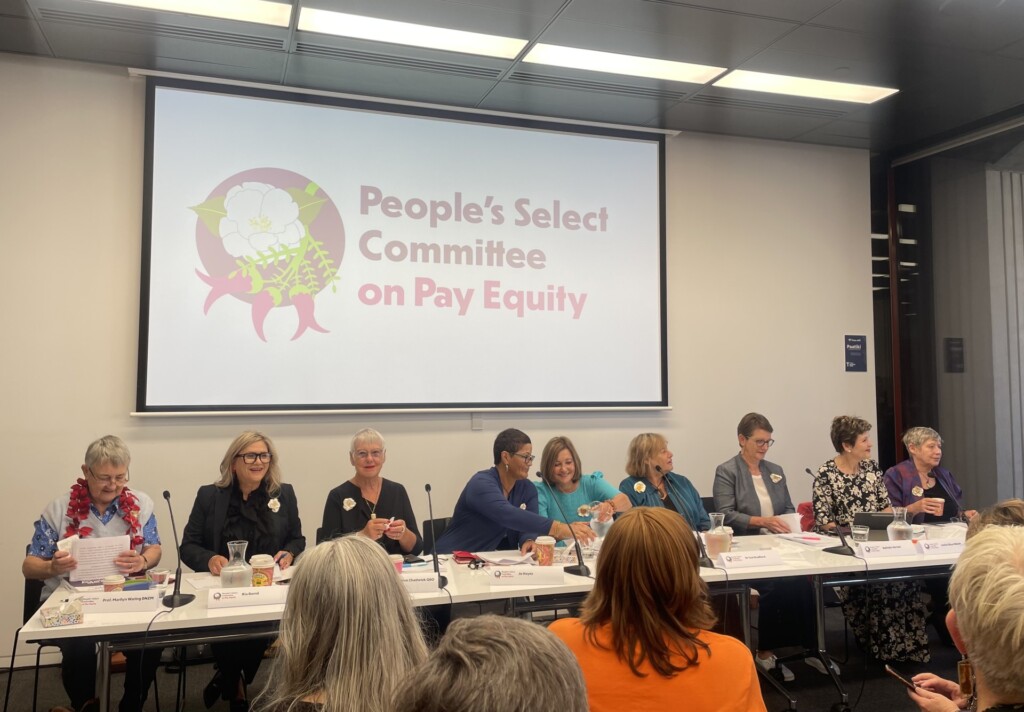
Following the Government’s decision, a group of former parliamentarians from across the political spectrum launched an Inquiry, with early support from Clare. This People’s Select Committee imitated the parliamentary process, giving people space to share evidence, opinions, and lived experience – an opportunity the Government did not provide when reversing such an important piece of legislation.
By the end of the Inquiry, around 1400 people had submitted their views on the changes, and many more showed support publicly. This was reflected in fundraising through Givealittle, which enabled people to back the Select Committee and emphasise their opposition to the retrospective pay equity changes. As noted in an RNZ article, “$12.8 billion originally earmarked to fix decades of systemic gender discrimination was instead returned to the Crown’s Budget allowances”. This is money that helps households cover essentials like childcare, housing and build greater financial stability. Taken together, the Committee’s findings highlight how pay equity is not merely a workplace issue, but also a broader question of fairness and public accountability.
Personal takes:
Sarah Habib, Philanthropic Support Officer: “I thought of all the women across all ethnicities, but notably Pasifika, Māori, migrant and refugee background women who play an important role in the everyday of life which many take for granted – our cleaners, our carers, our nurses. Making pay equity more difficult to access is a deterrent to their agency, well-being and ability to thrive instead of just get by. For young women starting their careers (such as myself), in female-dominated industries or not, pay inequities point to a lifelong ‘accumulation of disadvantage’, which reinforce harmful and sexist messaging. It is deeply meaningful that despite the rollbacks, people continue to fight. As we continue to fight, I’m going to make sure I hug my whānau near and far more often.”
Jan Logie, Strategic Funding Lead for Women: “It was so powerful to hear from a range of women leaders from different political perspectives all challenging this government’s decision to undermine progress towards pay equity and women’s human rights without proper consideration, public debate or even basic scrutiny.
Hundreds if not thousands of women have struggled for decades to end the undervaluing and underpayment of traditional women’s work. To be in the room with many of those women, some directly impacted by the government’s decision to reverse their agreed position that they were underpaid and prevent them making claims, was painful. However, I was glad that they were heard by the committee and the committee did such a thorough job of considering all of the evidence so as a country we can properly understand what happened and continue the struggle alongside those women bolstered by detailed, well-articulated evidence.”
Interested in finding out more?
Read the Report:
Read from the Convenor of the People’s Select Committee, Marilyn Waring:
RNZ Article: