
“Do not leave this room with good intentions. Leave with planned actions.” – WD Closing Ceremony
In late April, Clare supported two representatives from 5 rōpu to attend the Women Deliver conference in Naarm (Melbourne). This is one of the largest gender equality events in the world, which since its inception has brought together more than 30,000 people.
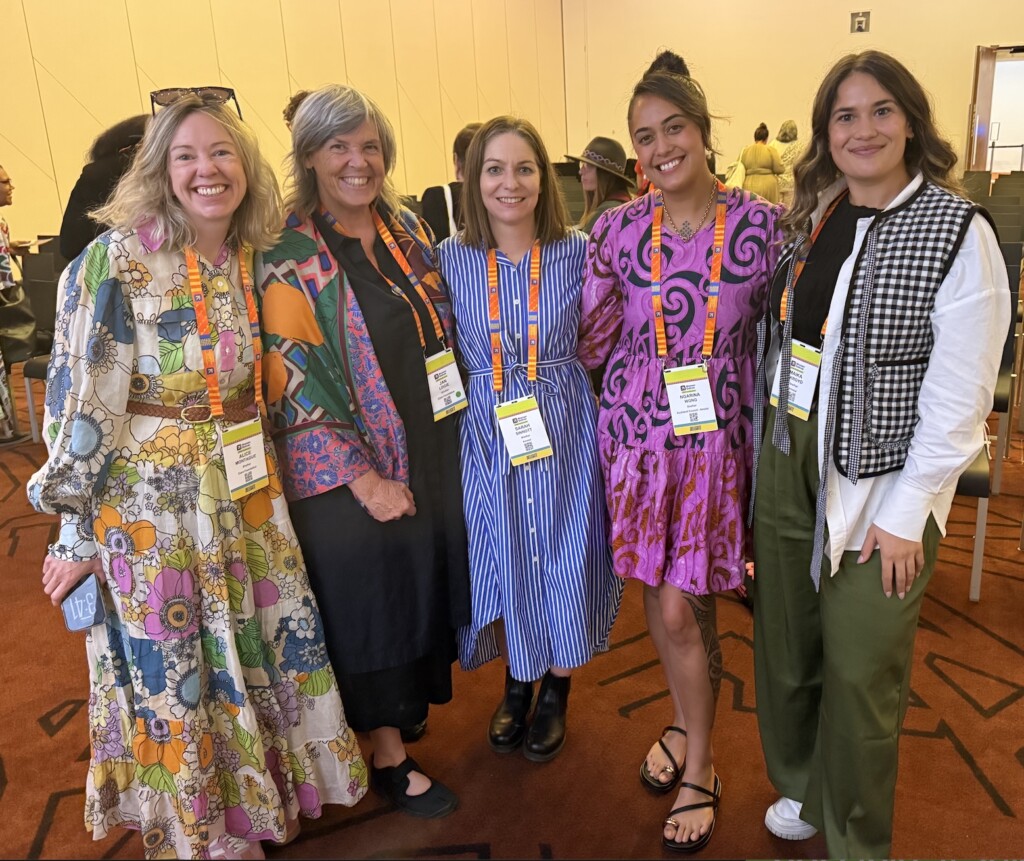
In 2007 the first ever conference was hosted in London, focusing on maternal health. But just under 20 years later, Women Deliver has morphed and convened on other big topics as well; such as the place of Indigenous women in climate resiliency and women’s economic rights.
This (nearly) 20th anniversary marked the first time Women Deliver was organised in the Oceania Pacific. Hosted on the unceded land of Wurundjeri Country, the conference also saw Indigenous women actively involved and leading at greater levels for the first time. Opening the conference by acknowledging the Indigenous people of Te Whenua Moemoeā (Australia) and embedding Indigenous leadership all throughout the conference signified the larger movement of Indigenous resistance and leadership, which has become more pronounced over the years.
“[this event] was grounded in First Nations and Pacific leadership, embedding Indigenous knowledge systems and perspectives not as add-ons, but as foundational.” (Croakey, 2026).
For many of Clare’s attendees, the conference emphasised the collective strength behind the international network of women and gender diverse people actively working towards better systems. This monumental strength is needed during a global push-back of women’s fundamental rights – seen in the rise of the mansophere, for example.
Reflections from Kiterangi Cameron & Dr. Meri Haami, representatives from Tu Tama Wāhine o Taranaki:
“We attended as young (ish) indigenous leaders from Tū Tama Wāhine o Taranaki, and by nature we looked to find other like-minded indigenous folk across the week. One of our stronger connections was with the First Nations Aboriginal and Torres Strait Island Women, in particular the Djirri Djirri women. We listened to their elders and followed their dance and storytelling across the week. Their commitment to bringing ceremony back to their children and into their homes was something we connected deeply with, understanding the power of ceremony, song and dance…
The conference also provided us with a good opportunity to reflect on the importance and relevance of the work we do for whānau, for tamariki and mokopuna. Reaffirming that we are on the right path and that we must continue to do the good and necessary Indigenous development, liberation and social justice work in our community.
A simple yet powerful standout moment for our team happened within the first 1min of arriving inside the huge and overwhelming convention centre. After being bag checked and body scanned, out of six thousand other delegates we walked directly into Jan Logie. When we relayed this back to the wider team in Taranaki, the comment was made, “its interesting how the wairua works isn’t it”. And with that said, we can say that our wairua left Naarm full of richness from having had this experience.”
Tania Bristow, Te Tai Tokerau Mana Wāhine Collective:
“What Women Deliver gave me was not a new direction. It was a global mirror held up to the work I am already doing – confirming it, enriching it, connecting it to a worldwide movement, and deepening my conviction about the most urgent and personal kaupapa I hold: the normalisation of sexual harm in our communities, and the silence that sustains it across generations.
Sexual harm is not a marginal issue in our communities. It touches every whānau. It moves across generations – from those who experienced it, to those who carry the silence, to those who inherit the trauma, the addiction, the poor mental health, the fractured relationships, and sometimes the cycles of harm itself. Untreated and unspoken, it becomes the architecture of suffering that shapes lives, fills prisons, overwhelms counselling services, and costs communities decades of healing…
The system is not failing; it is functioning exactly as it was designed. The silence around sexual harm is not an accident. Colonial systems stripped communities of structures that held accountability and named harm. Naming this is not despair. It is clarity. And clarity is where action begins.”
Women Deliver hosts a conference every three years. With the next one coming in 2029, it is a special opportunity for those who are able to attend, or who can help make attendance possible for others. The impact of being in such a space has shown to be profound and far-reaching.